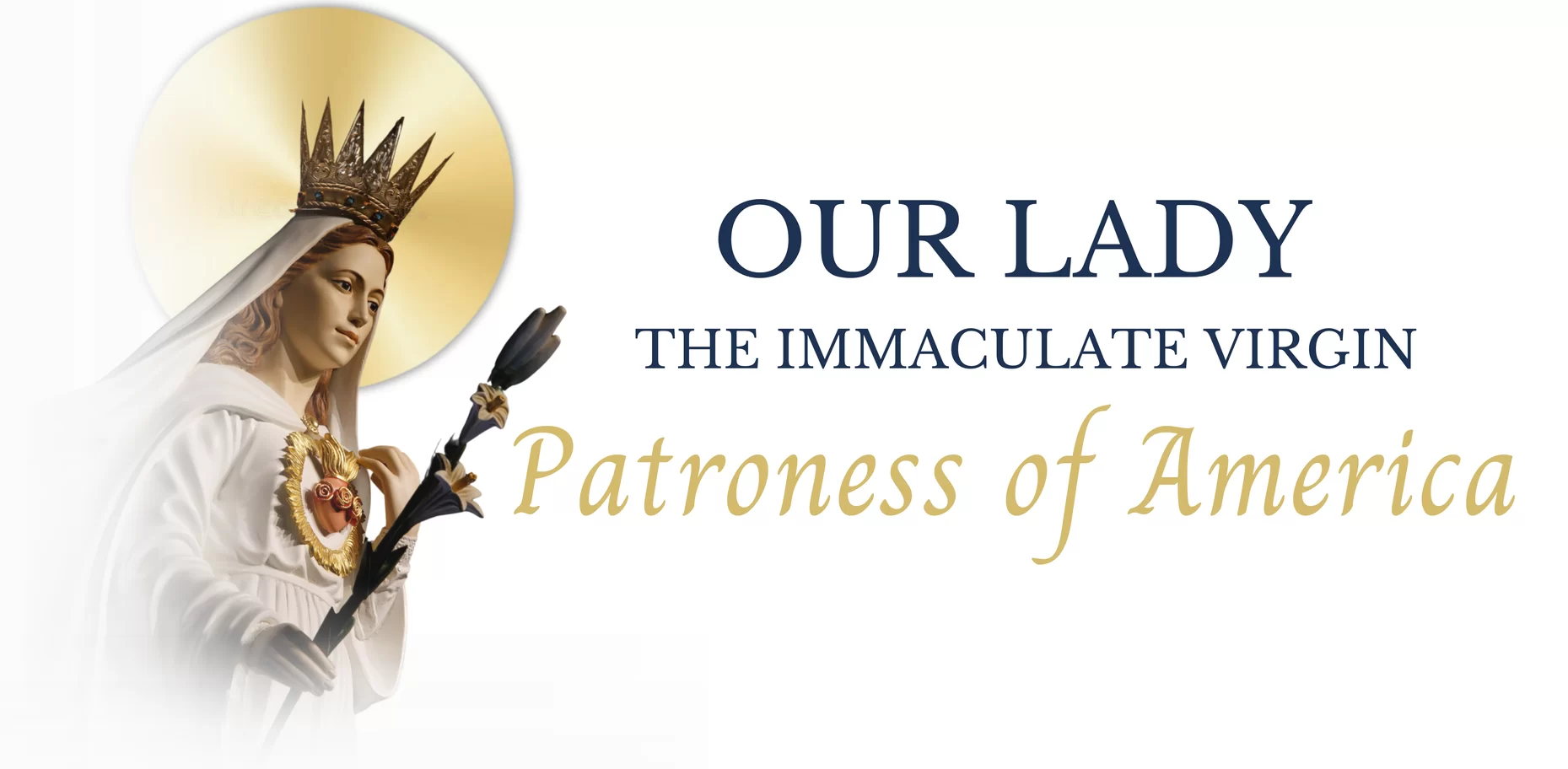
As part of the national commemoration of the 250th anniversary of the signing of the Declaration of Independence, the United States Conference of Catholic Bishops (USCCB) is preparing to consecrate the nation to the Sacred Heart of Jesus. The consecration will take place on June 11th, the vigil of the Solemnity of the Sacred Heart. How did this devotion to the Sacred Heart of Jesus come about, and what significance does it hold that a nation would be consecrated?
The devotion to the Sacred Heart of Jesus grew from the revelations of Jesus to Saint Margaret Mary Alacoque, a French nun with the Order of the Visitation. Margaret Mary’s early years were laden with suffering due to poor health and a difficult family life. The Church in that age was also suffering as it faced the heresy of Jansenism, a movement plagued by fear of God and rigorous scrupulosity. The sacraments were seen as a reward after much penance, preparation, and purification, rather than as a source of grace for healing and imperfection.
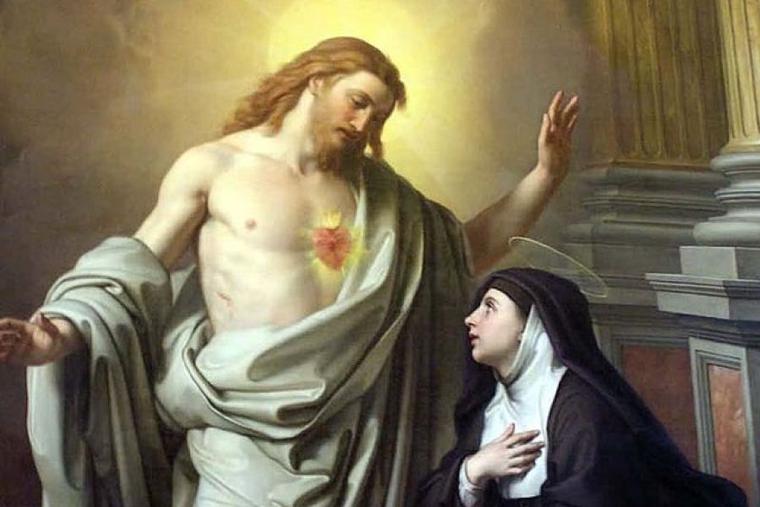
It was through that suffering nun to this suffering Church that Jesus had a message of love and mercy for the world. He appeared to Margaret Mary on the feast of Saint John the Beloved in 1673 while she was praying before the Blessed Sacrament. He invited her to be like John at that First Eucharist, and to rest her head against His Sacred Heart.
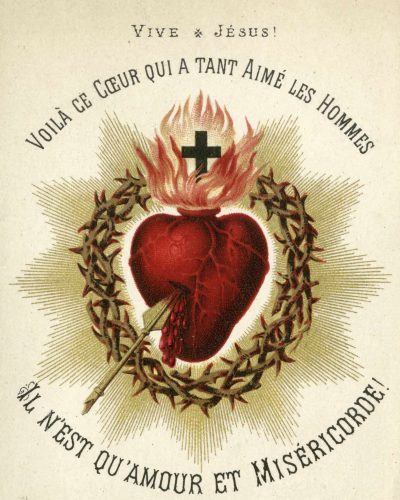
"Here is this heart which has loved mankind so much"; "He is nothing but love and mercy"
The image of the Sacred Heart that was given to Margaret Mary was a heart on fire, of human flesh, surrounded by thorns, bleeding, and surmounted by a cross. The fire was to show that Jesus is consumed by His passionate love for humanity – uncontainable, all-encompassing, transforming. The thorns, the bleeding, and the cross are all symbols of his suffering, his vulnerability, his total gift of self on the cross, and the price of redemption. The human flesh was the final word against Jansenism, showing that God was not some distant dictator, but the Word made flesh who longed to be one with His people. Where Jansenism made the Sacraments unapproachable, Jesus urged them to receive His Sacred Heart in the Blessed Sacrament frequently, desiring to feed a spiritually malnourished culture with His very self.
While the Church of France was wrestling with Jansenism, the country itself was facing somewhat of a golden age. King Louis XIV wanted to see the rise of the absolute monarchy, with pure indulgence being the crown jewel. It was a kingship characterized by lavishness and ultimate power, with domination and total allegiance as the end goal. Again, it was to this monarchical misalignment that Jesus came to reveal the true Kingdom, the Kingdom where his humble, merciful Sacred Heart reigns over all. Whether it was the pride and indulgence of a king or the false humility and coldness of Jansenism, the Sacred Heart of Jesus stood as the remedy to the two extremes faced by the French.
Palace of Versailles - the Showcase of Louis XIV's Monarchy
This wouldn’t be the last time the monarchy wrestled with the devotion to the Sacred Heart of Jesus. In 1689, Jesus told Margaret Mary that the king was to publicly consecrate the nation and himself to the Sacred Heart of Jesus. The Sacred Heart was also to be added to the coat of arms and the banner of France, in exchange for Divine protection and French victory. The last request for His enthronement was the command to build a basilica dedicated to the Sacred Heart, in which the nobility would worship Jesus as the Lord of Lords. These requests were ignored by Louis XIV and his predecessor, Louis XV. One hundred years to the day after the request was made, the French Revolution began. The imprisoned, terrified monarch of the day, King Louis XVI, promised in desperation that if he was restored to the throne, he would fulfill the request and consecrate himself and all of France to the Most Sacred Heart. It was too late for him to make a public consecration to a kingdom he no longer had authority over, and thus, Jesus’ command went unfulfilled by Louis XVI as well. Jesus even made reference to the tragic disobedience of the French monarchy to Lucia, one of the Fatima children, as a warning to the Pope’s delay of consecrating Russia to the Immaculate Heart of Mary.
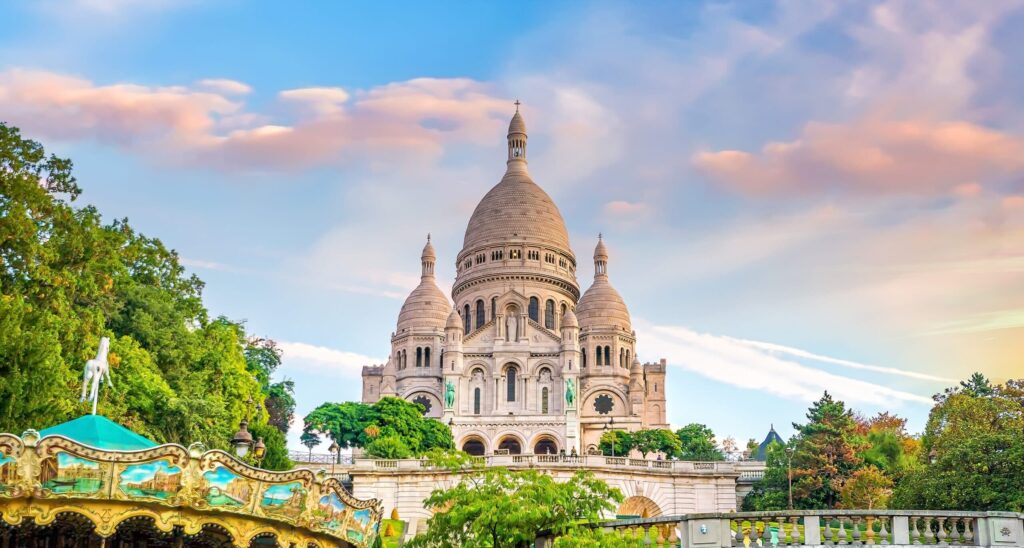
While no French monarch ever obeyed the requests of Jesus (and now no longer can since the French monarchy no longer exists), the people of France have been obedient. The emblem of the Sacred Heart made it onto the banners of France unofficially in 1793, when peasant Catholics revolted against the revolutionary government which was trying to outlaw Catholicism and martyr clergy. In 1875, the request for the basilica to the Sacred Heart was made possible by the decision of the French people to make a public act of reparation for the sins of the nation. The funds were raised by ordinary French Catholics, and the Basilica of the Sacré-Cœur was officially consecrated in 1919. It wasn’t until 1922 that France was consecrated to the Sacred Heart; a collective action of the Bishops of France (much like the Bishops of America are planning for in 2026).
Basilica of the Sacré-Cœur in France
While Jesus might not have appeared asking for a national consecration, the Bishops of the United States have clearly heard the call to do so. The Church is already seeing a tidal wave of renewal after the Eucharistic Congress (and the Eucharistic Procession that preceded it), but we’re still a deeply divided and hurting nation that is hungry for even more renewal. The bishops have created a blueprint for lay Catholics to participate in the consecration. First, they are asking people to join the novena beginning on June 3rd and leading up to the consecration day on June 12th. They are also encouraging parishes and small groups to make a collective 250 hours of Adoration and 250 works of mercy. In loving Jesus in the Blessed Sacrament and loving Jesus in our neighbor, the bishops are hoping that this consecration becomes more than just a passive consecration, but an active one that makes a real impact. As we have been doing with the synod, parishes will also be asked to pray the consecration prayer as an act of thanksgiving and reparation. Recognizing the immense need for renewal of the domestic church as well, the bishops are asking that families make an act of enthronement of the Sacred Heart in their homes, embracing His Lordship over their household.
We have much to be grateful for in these 250 years as a nation, and these 250 years of navigating what it means to be an American Catholic. We also have much reparation to make for those many years, and many prayers to offer for the years to come. What an immense grace for the United States Bishops to prioritize consecration of our nation. Both Pope Francis and Pope Leo XIV have written encyclicals on the Sacred Heart, showing that this devotion is still very much at the forefront of Jesus’ call for His Bride today. There can be nothing more life-changing than the fact that the Sacred Heart burns with love for you.
In America as it is in heaven. Amen.
My Divine Heart is so passionately in love with men that it can no longer contain within itself the flames of its ardent charity. It must pour them out by thy means, and manifest itself to them to enrich them with its precious treasures, which contain all the graces of which they have need to be saved from perdition.